
 Call Now (719) 784-7224


If you’ve spent a winter in Colorado Springs, you probably know the routine: a static shock every time you reach for a doorknob, lip balm in every coat pocket, and a gap between the floorboards that definitely wasn’t there in August.
At Big Cat Plumbing, Heating & Cooling, our Colorado Springs HVAC service pros start hearing about this as soon as people turn their furnaces on for the season, and most folks figure it’s just part of living at 6,000 feet. It’s a lot more fixable than that.
Here’s why your house gets so dry, what that’s doing to your home, and how a whole-home humidifier helps.
Why Your House Dries Out Once the Heat Comes On
Outdoor humidity around the Pikes Peak region often hovers near 50%, which isn’t especially low. The bigger factor is temperature. Cold air can only hold a small amount of moisture. When 20-degree air seeps into your house and your Colorado Springs heating system warms it to 70, that little bit of moisture gets spread across much warmer air, and relative humidity drops sharply.
To put a number on it, outdoor air at 20°F and 50% humidity ends up around 7% relative humidity once it’s heated to 70°F. That’s drier than the Sahara, which usually sits around 20 to 25%. Showers and cooking help a little, but it’s common for homes here to stay in the teens from November through March.
What Dry Air Does to Your Home
Much of your house is made of materials that soak up and give off moisture. When dry air pulls it out of them for months at a time, they shrink, and eventually you notice.
Wood floors, trim, and cabinets
Hardwood is usually the first thing people spot. Gaps open up between the boards, baseboards and door trim pull apart at the corners, and cabinet doors can warp just enough that they stop closing flush. Years of shrinking in winter and swelling in summer can leave boards cupped or cracked for good.
Walls, paint, and furniture
Drywall seams and corners tend to crack as the framing behind them shrinks, especially in newer homes. Wood furniture and instruments take a beating too. If your piano drifts out of tune every winter, dry air is a likely culprit.
Electronics
All that static isn’t great for your devices. A good zap to a laptop, game console, or smart speaker can damage the components inside.
Your comfort and your heating bill
Dry air also pulls moisture off your skin, which makes the house feel cooler than the thermostat says it is. A lot of people respond by nudging the heat up a few degrees. Once humidity is back in a healthy range, 68 often feels about as warm as 71 did, which eases the load on your furnace. Most people also notice fewer nosebleeds and better sleep within a few days.
What Humidity Level to Aim For
The EPA recommends keeping indoor humidity between 30% and 50%, but in a Colorado winter, the right number moves with the weather. When it’s around 40°F outside, 40 to 45% feels comfortable. On a zero-degree night, you’ll want to bring that down to the mid-20s so moisture doesn’t condense and frost over on the inside of your windows. Many modern humidistats make those adjustments for you.
To see where your home stands, leave an inexpensive digital hygrometer in your living room for a few days. A reading below 25% with the heat running means your house is drier than it should be.
How a Whole-Home Humidifier Works
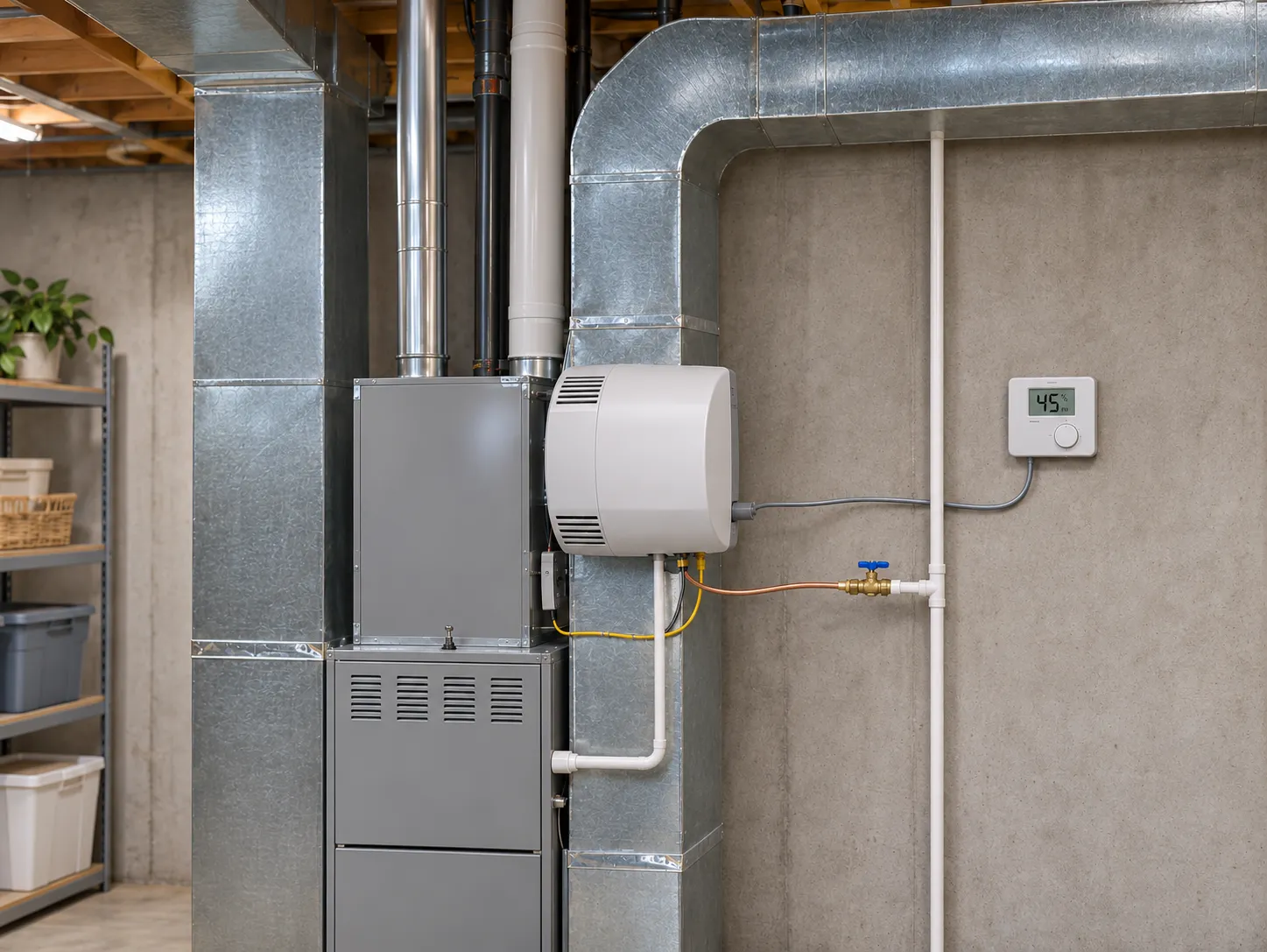
A whole-home humidifier ties into your forced-air system and adds moisture to the warm air as it travels through your ducts, so every room gets the benefit at once. You set your target humidity on a control, and the system handles the rest. You can see the options we install on our humidifiers and dehumidifiers page.
Most whole-home units fall into one of three categories:
- Bypass humidifiers use your furnace’s airflow to push air across a water panel. They’re simple, affordable, and a good fit for a lot of homes.
- Fan-powered humidifiers have a built-in fan, so they put out more moisture and keep up better in larger homes.
- Steam humidifiers boil water to create vapor. They’re the most precise option and can run even when the furnace isn’t actively heating, which helps in very dry homes or houses with tall ceilings.
The right fit depends on your square footage, furnace setup, and how dry your home gets.
Portable units vs. a whole-home system
A tabletop humidifier can make a bedroom more comfortable, but it only covers one space, needs refilling every day, and can leave a film of white mineral dust on your furniture. A whole-home humidifier connects straight to your water line and only needs attention once or twice a year.
Getting the Most Out of Your Humidifier
A humidifier does its best work when the rest of your system is in good shape:
- Ductwork: Leaky ducts in attics and crawlspaces pull in dry, unconditioned air. Aeroseal duct sealing closes those leaks from the inside.
- Furnace: A whole-home humidifier relies on steady airflow from your furnace. If yours is getting older or short-cycling, it’s smart to take care of that first.
- Annual upkeep: The water panel collects minerals over time and should be replaced about once a year. The easiest time to do it is during your fall furnace maintenance visit, right before the driest months.
- Thermostat: Some smart thermostats come with built-in humidity controls, so you can manage both from one screen.
Book a Humidity Check
Cracked floors, constant static, and dry sinuses don’t have to come standard with a Colorado Springs winter. To find out whether a whole-home humidifier makes sense for your house, contact Big Cat Plumbing, Heating & Cooling to book an appointment. We’ll measure your current humidity, take a look at your heating system, and recommend a setup that fits your home.

 All Service Areas